- Have any questions?
- 911 12345 29
- info@asianneurocentre.com

Stages of a Migraine? | Migraine Treatment in Indore
What Female Hormones Cause Migraines?
February 26, 2026What is Migraine?
Migraine is a neurological condition that causes intense, recurring headaches often accompanied by other symptoms such as nausea, vomiting, and sensitivity to light or sound.
Unlike a regular headache, a migraine can significantly interfere with daily activities and may last for several hours or even days. Many people who experience migraines report throbbing or pulsating pain, usually on one side of the head.
Migraines affect millions of people worldwide and can occur at any age, although they are more common in adults and particularly prevalent among women. The exact cause of migraine is not fully understood, but experts believe it involves complex changes in the brain, nerve signals, and blood vessels.
Several triggers can lead to a migraine attack. Common triggers include stress, lack of sleep, hormonal changes, certain foods, dehydration, and prolonged screen exposure. Environmental factors such as bright lights, loud sounds, or strong smells can also trigger migraine episodes in some individuals.
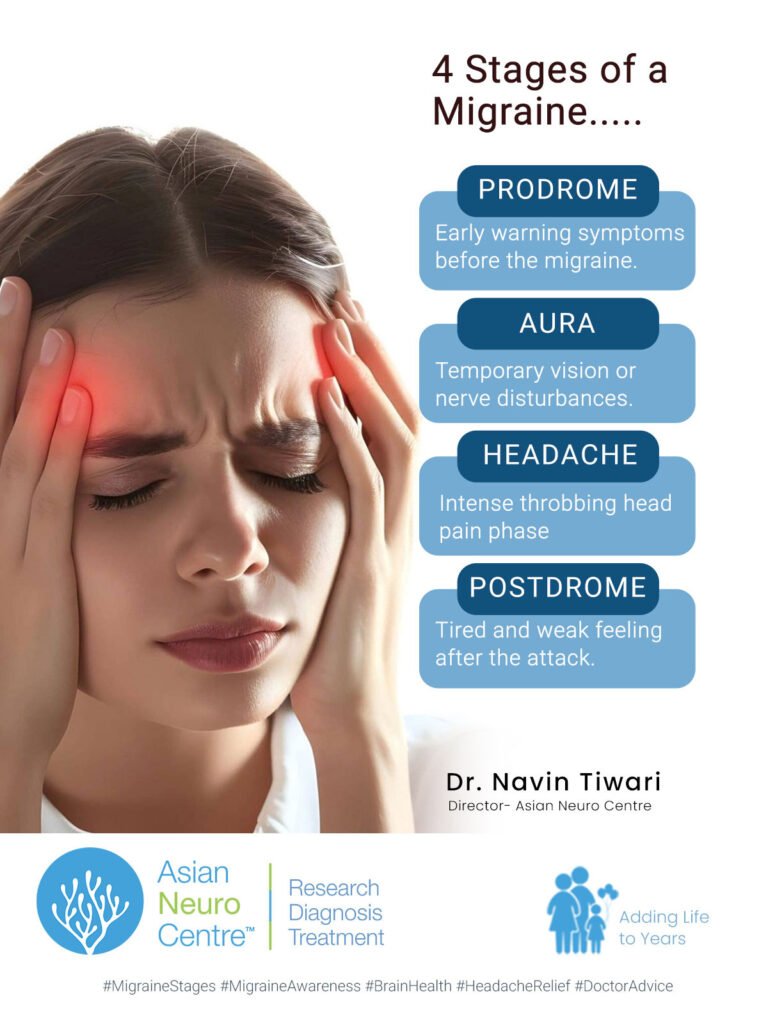
What are The Stages of a Migraine?
Migraines usually develop in stages, although not everyone experiences all of them. Understanding these stages can help patients recognize an attack early and take preventive measures.
1. Prodrome Stage: The prodrome stage occurs several hours or even a day before the migraine headache begins. During this stage, individuals may notice subtle warning signs that indicate a migraine is coming. Common symptoms include mood changes, fatigue, food cravings, difficulty concentrating, neck stiffness, and increased thirst. Recognizing these early signs can help patients take medication or rest before the migraine intensifies.
2. Aura Stage: Some people experience a stage known as aura before the headache starts. Aura typically lasts between 5 and 60 minutes and may involve visual disturbances such as flashing lights, zigzag lines, blurred vision, or blind spots. In some cases, individuals may also experience tingling sensations in the face or hands, speech difficulties, or temporary numbness. Not all migraine sufferers experience aura, but for those who do, it acts as a clear warning that a migraine attack is approaching.
3. Headache Stage: This is the most intense stage of a migraine. The headache phase usually lasts from 4 hours to 72 hours if left untreated. During this stage, individuals experience moderate to severe throbbing or pulsating pain, often on one side of the head. The pain may worsen with physical activity.
4. Postdrome Stage: The final stage of a migraine is known as the postdrome or “migraine hangover.” This stage occurs after the headache subsides and may last for several hours or even a day. People often feel exhausted, weak, confused, or mentally drained during this time. Some individuals may also experience difficulty concentrating or mild lingering head discomfort.
Although the pain has ended, the brain and body still need time to recover from the migraine attack.
Migraine treatment in Indore | The Best Neurologist in Indore
For individuals experiencing frequent or severe migraines, seeking professional medical care is essential. Consultation with a qualified neurologist can help identify triggers, confirm a diagnosis, and develop an effective treatment plan.
One of the trusted specialists in this field is Dr. Navin Tiwari. Patients looking for expert migraine care can benefit from his extensive experience in diagnosing and managing neurological conditions.
Treatment and consultation are available at Asian Neuro Centre, a premier medical facility dedicated to advanced neurological care. The centre focuses on accurate diagnosis and personalized treatment for various brain and nerve-related disorders.
Led by Dr. Navin Tiwari, one of the most trusted and experienced neurologists in Indore, Asian Neuro Centre specializes in the comprehensive diagnosis and treatment of a wide spectrum of neurological conditions, including migraines, headaches, epilepsy, and nerve disorders.
Patients receive modern diagnostic evaluation, lifestyle guidance, and advanced treatment options designed to reduce migraine frequency and improve quality of life.
Conclusion
Migraine is more than just a severe headache; it is a complex neurological condition that progresses through different stages. From early warning signs in the prodrome phase to recovery during the postdrome stage, each phase plays a role in the migraine cycle.
Understanding these stages can help individuals recognize symptoms early and manage attacks more effectively.
Dr. Navin Tiwari
Consulting Neurologist
