- Have any questions?
- 911 12345 29
- info@asianneurocentre.com

What Is the Best Treatment for Lumbar Spondylosis in Indore?
सर्वाइकल और लम्बर स्पोंडिलोसिस इलाज इंदौर में – डॉ. नवीन तिवारी
January 10, 2026कंपकंपी का इलाज इंदौर में | डॉ. नवीन तिवारी – न्यूरोलॉजिस्ट
January 31, 2026What Is Lumbar Spondylosis
Lumbar spondylosis is a degenerative condition of the lower spine (lumbar region) that occurs due to age-related wear and tear of the spinal discs, vertebrae, and joints.
Over time, the intervertebral discs lose water content and flexibility, leading to disc thinning, bone spur formation (osteophytes), and stiffness in the lower back.
This condition is very common after the age of 30–40 and is increasingly seen in younger people due to poor posture, sedentary lifestyle, obesity, and prolonged sitting.
Lumbar spondylosis develops gradually and may remain mild in some individuals, while in others it can progress and significantly affect daily activities.
What Are the Worst Symptoms of Lumbar Spondylosis?
The symptoms of lumbar spondylosis can vary depending on the severity of degeneration and nerve involvement. Mild cases may only cause occasional lower back pain or stiffness, especially after rest.
However, in advanced stages, symptoms can become more severe. The worst symptoms include chronic lower back pain that worsens with movement, bending, or standing for long periods.
Pain may radiate to the hips, buttocks, or legs, commonly known as sciatica, if spinal nerves are compressed.
Other concerning symptoms include numbness, tingling, or weakness in the legs, difficulty walking, reduced flexibility of the spine, and muscle spasms. In rare but serious cases, bowel or bladder control issues may occur, which require immediate medical attention.
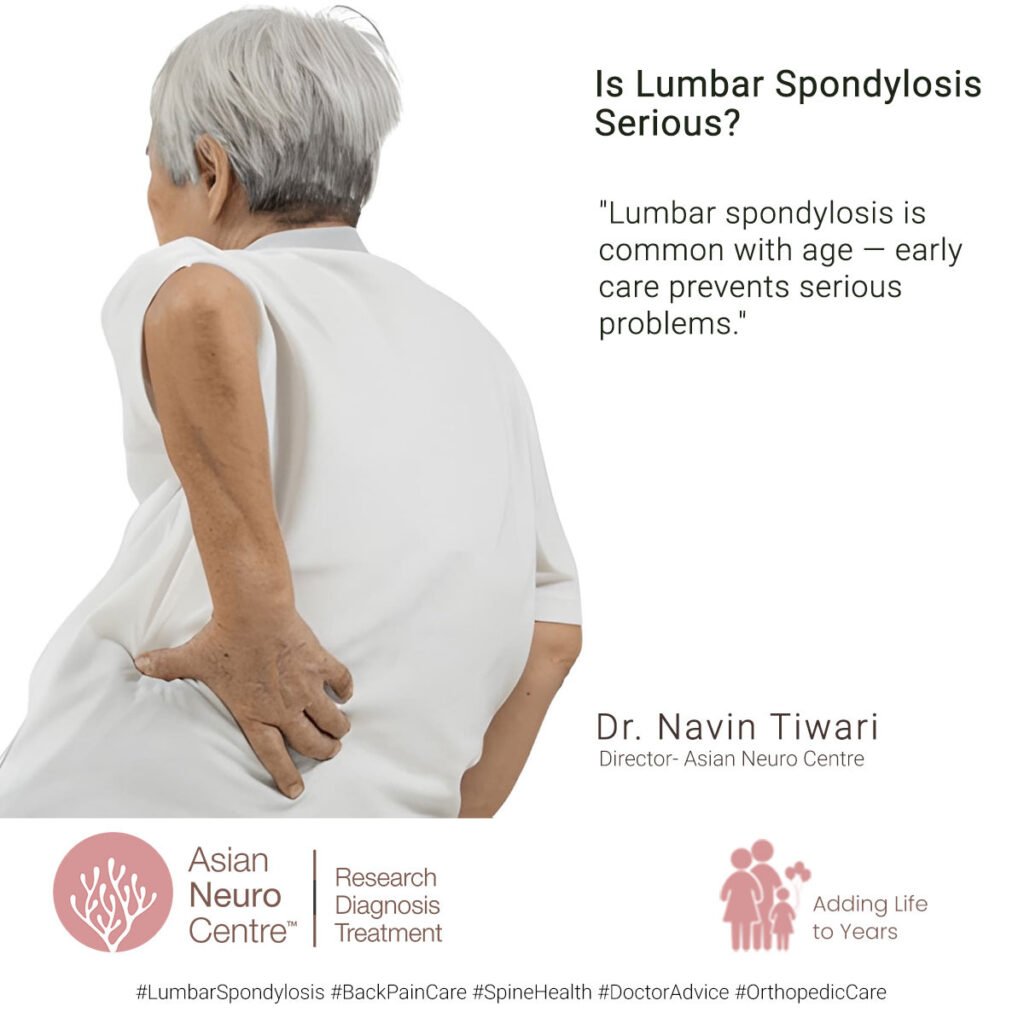
Is Lumbar Spondylosis Serious
Lumbar spondylosis is not usually life-threatening, but it can become serious if left untreated or ignored. In its early stages, it is manageable with lifestyle changes, physiotherapy, and medications.
However, if degeneration progresses, it may lead to complications such as nerve compression, spinal stenosis, or slipped discs. These conditions can cause persistent pain, mobility issues, and reduced quality of life. Chronic pain can also impact mental health, leading to stress, anxiety, or depression.
Therefore, while lumbar spondylosis is a common condition, it should not be taken lightly. Early diagnosis and proper management play a crucial role in preventing long-term complications.
What Is the Best Treatment for Lumbar Spondylosis in Indore?
The best treatment for lumbar spondylosis depends on the severity of symptoms and individual patient needs. Treatment usually starts with conservative methods such as pain-relief medications, anti-inflammatory drugs, muscle relaxants, and guided physiotherapy to strengthen back muscles and improve posture.
Lifestyle modifications, including weight management, ergonomic sitting, and regular exercise, are equally important. For patients experiencing nerve-related symptoms such as leg pain, numbness, or weakness, expert neurological evaluation is essential.
In Indore, Dr. Navin Tiwari is widely regarded as one of the best neurologists for treating lumbar spondylosis. With his extensive experience, advanced diagnostic approach, and patient-focused care, Dr. Navin Tiwari provides comprehensive treatment plans tailored to each patient.
His goal is not just pain relief but long-term spine health and improved quality of life. Early consultation with a specialist like Dr. Navin Tiwari can help manage lumbar spondylosis effectively and prevent complications.
Dr. Navin Tiwari
Consulting Neurologist
