- Have any questions?
- 911 12345 29
- info@asianneurocentre.com

When Should I Be Worried About Numbness – Dr. Navin Tiwari
What is Numbness, Causes, Symptoms & Treatment in Indore
May 9, 2026Can Stress Cause Paralysis? | Paralysis Treatment in Indore
June 17, 2026What Is Numbness
Numbness is a condition in which a person loses normal sensation in a part of the body. It may feel like tingling, burning, weakness, or a “pins and needles” sensation.
Numbness most commonly affects the hands, arms, feet, and legs, but it can occur anywhere in the body. In some cases, numbness is temporary and harmless, such as when sitting or sleeping in an uncomfortable position for a long time.
However, persistent or sudden numbness can sometimes indicate an underlying neurological or medical condition.
Numbness usually occurs due to problems affecting the nerves or blood circulation. The nervous system carries signals between the brain, spinal cord, and different body parts.
When these signals are interrupted because of nerve compression, injury, inflammation, or disease, numbness can develop. Conditions such as diabetes, sciatica, vitamin deficiencies, slipped discs, stroke, multiple sclerosis, and peripheral neuropathy are some common causes.
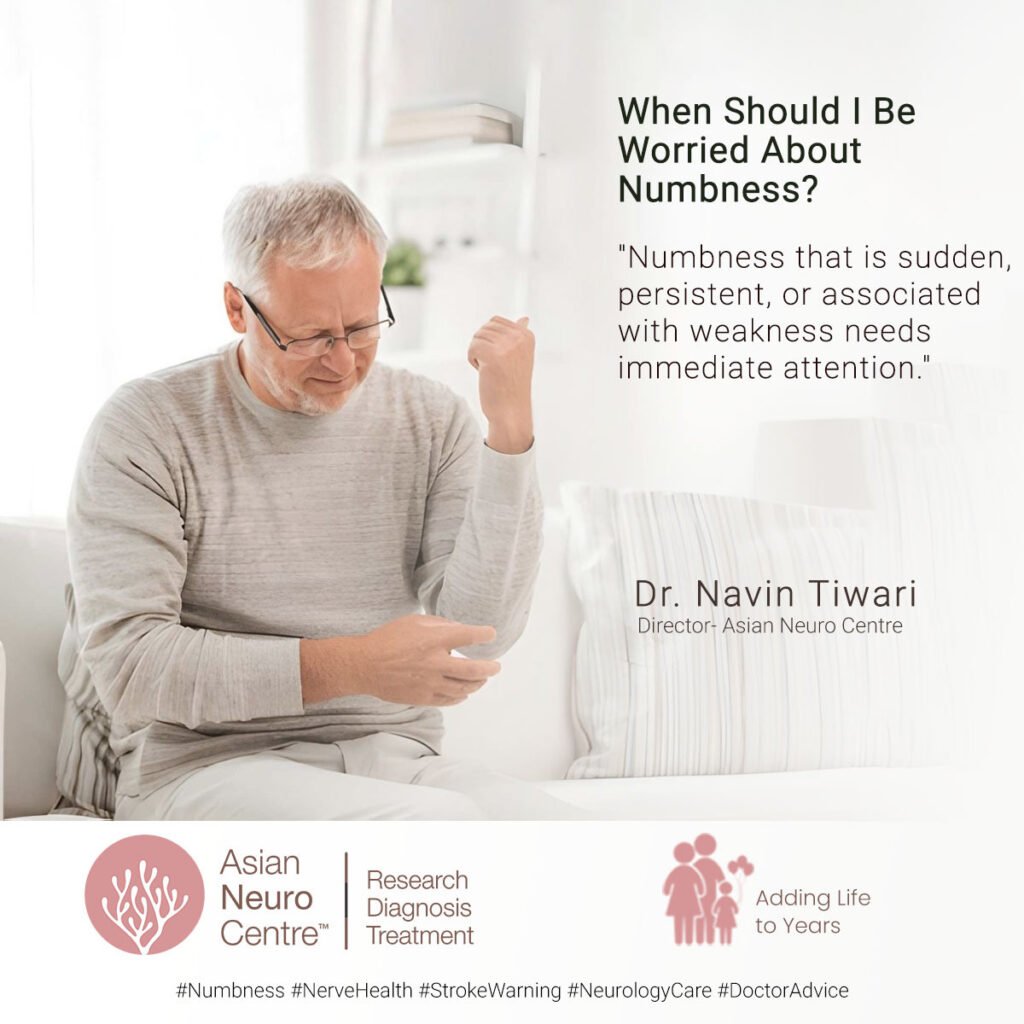
When Should I Be Worried About Numbness
While mild numbness may not always be dangerous, certain symptoms should never be ignored. You should seek medical attention if numbness appears suddenly, worsens over time, or is associated with other neurological symptoms.
- Sudden Numbness on One Side of the Body: Sudden numbness affecting the face, arm, or leg on one side of the body can be a warning sign of a stroke or transient ischemic attack (TIA). This is considered a medical emergency. Symptoms such as facial drooping, difficulty speaking, confusion, dizziness, or trouble walking should be treated immediately.
- Persistent or Recurrent Numbness: If numbness continues for days or frequently returns, it may indicate chronic nerve problems or underlying medical conditions like diabetes, vitamin B12 deficiency, thyroid disorders, or peripheral neuropathy. Persistent numbness should be evaluated by a neurologist.
- Numbness with Weakness or Loss of Balance: Numbness associated with muscle weakness, difficulty walking, or loss of coordination may point toward spinal cord disorders, multiple sclerosis, or severe nerve compression. These symptoms can interfere with daily life and may worsen if untreated.
- Numbness After an Injury: Numbness following an accident, fall, or injury to the back, neck, or head may suggest nerve or spinal cord damage. Immediate medical assessment is important to prevent permanent complications.
- Numbness with Severe Pain: If numbness is accompanied by severe neck pain, back pain, or radiating pain in the legs or arms, conditions such as sciatica, herniated disc, or pinched nerves may be responsible. Early diagnosis and treatment can reduce pain and prevent worsening symptoms.
- Numbness with Vision or Speech Problems: Numbness occurring along with blurred vision, severe headache, slurred speech, or confusion can indicate serious neurological disorders. These symptoms require urgent medical evaluation.
- Numbness with Loss of Bladder or Bowel Control: Loss of bladder or bowel control along with numbness can indicate severe spinal cord compression or cauda equina syndrome, which is a medical emergency requiring immediate treatment.
Treatment of Numbness in Indore
Proper diagnosis is essential for effective treatment of numbness. The treatment depends on identifying the underlying cause, whether it is nerve compression, diabetes, vitamin deficiency, spinal disorders, or neurological disease. Common treatment methods include medications, physiotherapy, lifestyle modifications, vitamin supplements, and advanced neurological care.
Asian Neuro Centre is a premier medical facility in Indore dedicated to providing advanced neurological care. Led by Dr. Navin Tiwari, one of the most trusted and experienced neurologists in Indore, the centre offers expert evaluation and treatment for various neurological conditions causing numbness and nerve-related symptoms.
Patients receive personalized care using modern diagnostic techniques and advanced treatment approaches aimed at improving nerve function and overall quality of life.
Conclusion
Numbness can be temporary and harmless in some situations, but persistent or sudden numbness should never be ignored. Warning signs such as weakness, severe pain, speech difficulty, loss of balance, or bladder control may indicate serious neurological conditions that require immediate medical attention.
Early diagnosis and timely treatment play a crucial role in preventing complications and restoring normal nerve function. If numbness becomes frequent or interferes with daily activities, consulting an experienced neurologist is the best step toward proper care and recovery.
Dr. Navin Tiwari
Consulting Neurologist
