- Have any questions?
- 911 12345 29
- info@asianneurocentre.com

When to Worry About Vertigo?
Is Dizziness a Symptom of a Stroke?
November 25, 2025Can Cervical Problems Cause Vertigo?
December 10, 2025What is Vertigo?
Vertigo is a sensation in which a person feels that they or their surroundings are spinning, tilting, or moving even when everything is still. It is not an illness itself but a symptom of an underlying condition affecting the inner ear, brain, or sensory nerve pathways.
People experiencing vertigo often describe it as dizziness with a false sense of motion. This can lead to balance problems, nausea, vomiting, sweating, and difficulty standing or walking.
Vertigo is commonly caused by issues in the inner ear—especially the vestibular system, which helps maintain balance. Some frequent causes include Benign Paroxysmal Positional Vertigo (BPPV), where tiny crystals in the ear move out of place; vestibular neuritis, an infection affecting the inner ear nerve; and Ménière’s disease, a condition associated with fluid buildup, hearing loss, and ringing in the ears.
Less commonly, vertigo can originate from neurological problems such as migraines, stroke, or brain tumors. Because vertigo has many possible causes, understanding when it needs urgent attention is important.
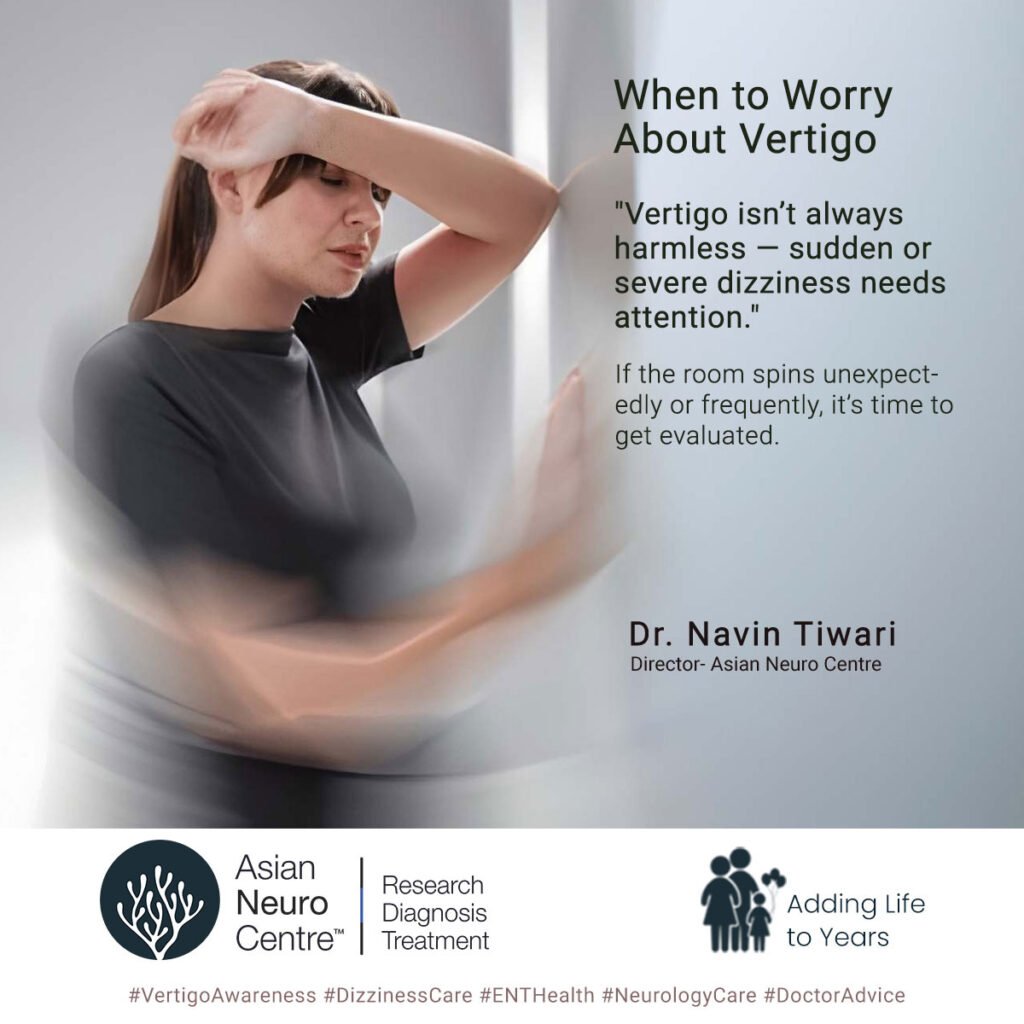
When to Worry About Vertigo?
While many episodes of vertigo are harmless and resolve on their own, certain signs indicate that medical help is necessary. You should worry about vertigo when:
1. It Occurs Suddenly and Severely
A sudden, intense spinning sensation that appears without warning, especially if accompanied by headache, confusion, or difficulty speaking, can be a sign of a stroke. Immediate medical evaluation is essential in such cases.
2. It Comes with Neurological Symptoms
If vertigo is accompanied by blurred vision, double vision, trouble walking, weakness in the arms or legs, slurred speech, facial drooping, or loss of coordination, it may indicate a serious brain-related condition. Seek emergency care right away.
3. There Is Hearing Loss or Ringing in the Ears
Persistent vertigo along with hearing loss, ear fullness, or tinnitus may point to Ménière’s disease or other ear disorders that require timely treatment to prevent permanent hearing damage.
4. You Experience Frequent or Persistent Episodes
If vertigo occurs repeatedly over days or weeks, or if it lasts longer than a few minutes each time, it may indicate an underlying condition such as BPPV, vestibular migraine, or chronic inner ear dysfunction. A doctor can diagnose and treat the cause, often improving symptoms significantly.
5. It Happens After a Head Injury
Any vertigo following a fall, accident, or head trauma needs medical attention. This could be a sign of concussion, bleeding in the brain, or damage to the inner ear.
6. Vertigo Causes Trouble Standing or Increases Fall Risk
If the dizziness is so strong that you cannot walk steadily or feel at risk of falling, consult a doctor. Falls can cause serious injuries, especially in older adults.
7. Vertigo Is Accompanied by a Severe Headache
A sudden severe headache with vertigo may be a symptom of migraine or, in rare cases, a brain hemorrhage. Do not ignore this combination.
Conclusion
Vertigo is a common and often treatable condition, but it can sometimes signal serious health problems. Mild episodes triggered by head movements or inner ear disturbances usually improve with simple treatments.
However, vertigo that appears suddenly, occurs frequently, or comes with neurological symptoms, hearing changes, or severe headaches should never be ignored.
Seeking timely medical advice can help identify the cause, prevent complications, and ensure proper treatment.
Understanding these warning signs helps you know when vertigo is just a temporary discomfort—and when it requires urgent care.
Dr. Navin Tiwari
Consulting Neurologist
