- Have any questions?
- 911 12345 29
- info@asianneurocentre.com
Can High Blood Pressure Cause Stroke? – Dr. Navin Tiwari
Can Stroke Happen at a Young Age? – Dr. Navin Tiwari
October 21, 2026What Is Stroke?
A stroke is a serious medical condition that occurs when the blood supply to a part of the brain is interrupted or when a blood vessel in the brain ruptures.
As a result, brain cells do not receive sufficient oxygen and nutrients, causing them to become damaged or die. Stroke is a medical emergency that requires immediate attention because timely treatment can reduce brain damage and the risk of long-term disability.
There are two main types of stroke:
- Ischaemic Stroke: Occurs when a blood clot blocks an artery supplying blood to the brain. It is the most common type of stroke.
- Haemorrhagic Stroke: Occurs when a blood vessel in the brain ruptures, causing bleeding and pressure on surrounding brain tissues.
Common warning signs include sudden weakness or numbness on one side of the body, difficulty speaking, vision problems, dizziness, loss of balance, and severe unexplained headache. Recognising these symptoms early can save lives.
Can High Blood Pressure Cause Stroke?
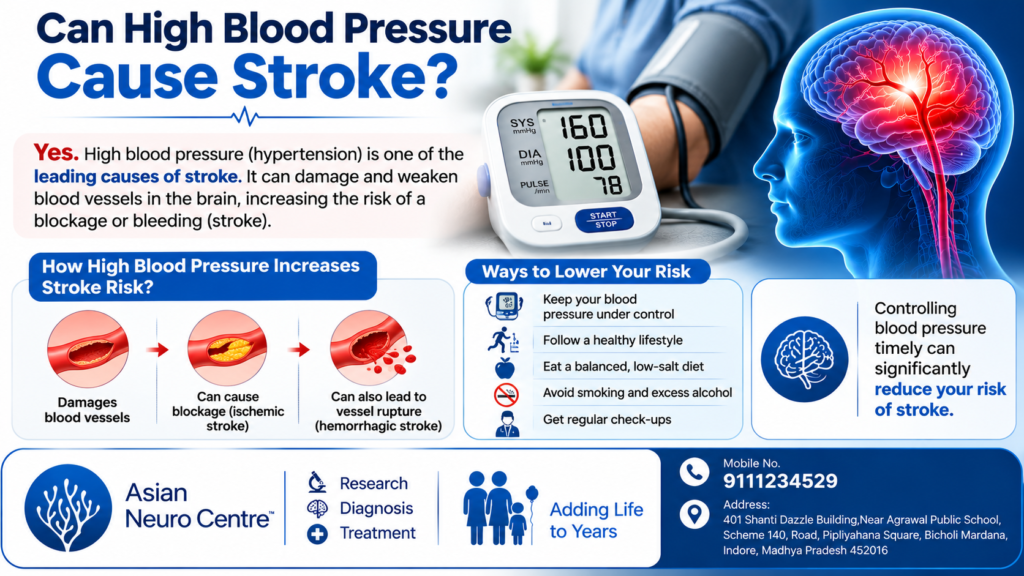
Yes, high blood pressure, also known as hypertension, is one of the leading risk factors for stroke. When blood pressure remains consistently high, it places excessive pressure on the walls of blood vessels, gradually weakening and damaging them.
Hypertension can increase the risk of both major types of stroke in the following ways:
1. Increased Risk of Ischaemic Stroke
High blood pressure damages the inner lining of arteries, making them more likely to develop fatty deposits and narrowing. This condition, known as atherosclerosis, can restrict blood flow or contribute to blood clot formation. If a clot blocks an artery supplying the brain, it can cause an ischaemic stroke.
2. Increased Risk of Haemorrhagic Stroke
Long-term uncontrolled hypertension can weaken blood vessel walls. These weakened vessels may eventually rupture, causing bleeding inside or around the brain. This can result in a haemorrhagic stroke, which can be life-threatening.
3. Damage to Small Blood Vessels
Persistent high blood pressure can also damage the small blood vessels inside the brain. Over time, this may increase the risk of small vessel strokes and contribute to vascular cognitive impairment.
How Can You Reduce the Risk of Stroke?
Managing blood pressure is essential for preventing stroke. Some important preventive measures include:
- Monitor your blood pressure regularly.
- Take prescribed blood pressure medications consistently.
- Follow a balanced, low-sodium diet.
- Exercise regularly and maintain a healthy weight.
- Avoid smoking and limit alcohol consumption.
- Manage diabetes and cholesterol levels.
- Attend regular medical check-ups.
Remember, never stop prescribed blood pressure medication without consulting your doctor.
Stroke Treatment in Indore
Early diagnosis and timely treatment are essential for improving stroke outcomes. At Asian Neuro Centre, Indore, patients can access specialised neurological evaluation and care under the guidance of Dr. Navin Tiwari, Consultant Neurologist.
Dr. Navin Tiwari focuses on the diagnosis, management, and treatment of neurological conditions, including stroke and other cerebrovascular disorders.
Stroke treatment depends on its type, severity, and the time elapsed since symptoms began. For eligible patients with an ischaemic stroke, emergency treatments may include clot-dissolving medications (thrombolysis) or mechanical thrombectomy to restore blood flow.
Haemorrhagic stroke management may involve controlling blood pressure, managing bleeding, and neurosurgical intervention when required.
The centre emphasises timely neurological assessment, appropriate treatment planning, and ongoing care. For neurological consultation, visit Asian Neuro Centre.
CONCLUSION
High blood pressure is a major preventable risk factor for stroke. Uncontrolled hypertension can damage blood vessels, increase the risk of blood clots, and cause bleeding in the brain. Regular blood pressure monitoring, healthy lifestyle choices, and appropriate medical treatment can significantly reduce this risk.
Dr. Navin Tiwari at Asian Neuro Centre, Indore, provides specialised neurological consultation and care for patients experiencing stroke and other neurological conditions.
Recognising stroke symptoms and seeking immediate medical attention can make a significant difference in treatment outcomes and recovery. Never ignore sudden neurological symptoms, as every minute matters during a stroke.
Frequently Asked Questions (FAQs)
Q.1. Can high blood pressure cause a stroke?
Ans. Yes, high blood pressure is one of the leading risk factors for stroke. It can damage and weaken blood vessels in the brain, increasing the risk of blockage or rupture. Keeping blood pressure under control can significantly reduce the risk of stroke.
Q.2. How does high blood pressure cause a stroke?
Ans. High blood pressure puts continuous pressure on blood vessel walls. Over time, this can damage the arteries, cause them to narrow, or make them more likely to rupture. This may lead to an ischemic stroke or a hemorrhagic stroke.
Q.3. What blood pressure level can cause a stroke?
Ans. There is no single blood pressure reading that guarantees a stroke will occur. However, consistently high blood pressure increases stroke risk. A reading above 180/120 mmHg is considered a hypertensive crisis and requires immediate medical attention, especially if accompanied by symptoms.
Q.4. Can a person have a stroke due to sudden high blood pressure?
Ans. A sudden, severe rise in blood pressure can be dangerous and may be associated with stroke or other serious complications. However, stroke can occur at different blood pressure levels. Sudden neurological symptoms require emergency medical attention.
Q.5. What are the warning signs of a stroke caused by high blood pressure?
Ans. Warning signs include sudden facial drooping, weakness or numbness in one arm or leg, difficulty speaking, sudden vision problems, dizziness, or loss of balance. Seek emergency medical help immediately if any of these symptoms appear.
Q.6. Can high blood pressure cause a brain hemorrhage?
Ans. Yes. Long-term uncontrolled high blood pressure can weaken small blood vessels in the brain. In some cases, a blood vessel may rupture and cause bleeding inside the brain, known as a hemorrhagic stroke.
Q.7. Can controlling blood pressure prevent a stroke?
Ans. Controlling blood pressure can significantly lower the risk of stroke. Regular monitoring, prescribed medication, a balanced diet, physical activity, limiting salt, and avoiding smoking can help maintain healthy blood pressure levels.
Q.8. Can young adults have a stroke due to high blood pressure?
Ans. Yes. Although stroke is more common in older adults, young people can also experience strokes. Uncontrolled high blood pressure, smoking, diabetes, heart conditions, and other medical factors can increase the risk.
Q.9. What should I do if high blood pressure causes stroke symptoms?
Ans. Call emergency services immediately if you notice sudden facial drooping, arm weakness, speech difficulty, or vision problems. Do not wait for symptoms to disappear or try to lower blood pressure rapidly at home. Early hospital treatment is essential.
Q.10. Can high blood pressure cause a mini-stroke?
Ans. High blood pressure increases the risk of a transient ischemic attack (TIA), commonly called a mini-stroke. TIA symptoms may disappear within minutes, but they require immediate medical evaluation because they can warn of a future major stroke.
Q.11. Which doctor should I consult for stroke-related problems in Indore?
Ans. For stroke-related neurological evaluation and follow-up care, you can consult Dr. Navin Tiwari at Asian Neuro Centre, Indore. However, sudden stroke symptoms require immediate emergency hospital care.
Q.12. Where can I get stroke consultation in Indore?
Ans. For neurological consultation and stroke-related follow-up, patients can contact Dr. Navin Tiwari at Asian Neuro Centre, Indore, for professional guidance and evaluation.
