- Have any questions?
- 911 12345 29
- info@asianneurocentre.com

What Female Hormones Cause Migraines?
शिशुओं में झटके क्या होते हैं? | शिशुओं में झटके का इलाज इंदौर में
February 16, 2026Stages of a Migraine? | Migraine Treatment in Indore
March 10, 2026What is a Migraine?
Migraine is a neurological disorder that causes recurrent, moderate to severe headaches, often described as throbbing or pulsating pain on one side of the head.
Unlike a normal headache, migraine is usually accompanied by additional symptoms such as nausea, vomiting, sensitivity to light (photophobia), sensitivity to sound (phonophobia), and sometimes visual disturbances known as aura.
A migraine attack can last anywhere from 4 hours to 72 hours if left untreated. Some people experience warning signs before the headache begins, such as mood changes, food cravings, neck stiffness, or fatigue.
In women, migraines are particularly common and often linked to hormonal fluctuations. In fact, women are about three times more likely to experience migraines than men, largely due to changes in female hormones.
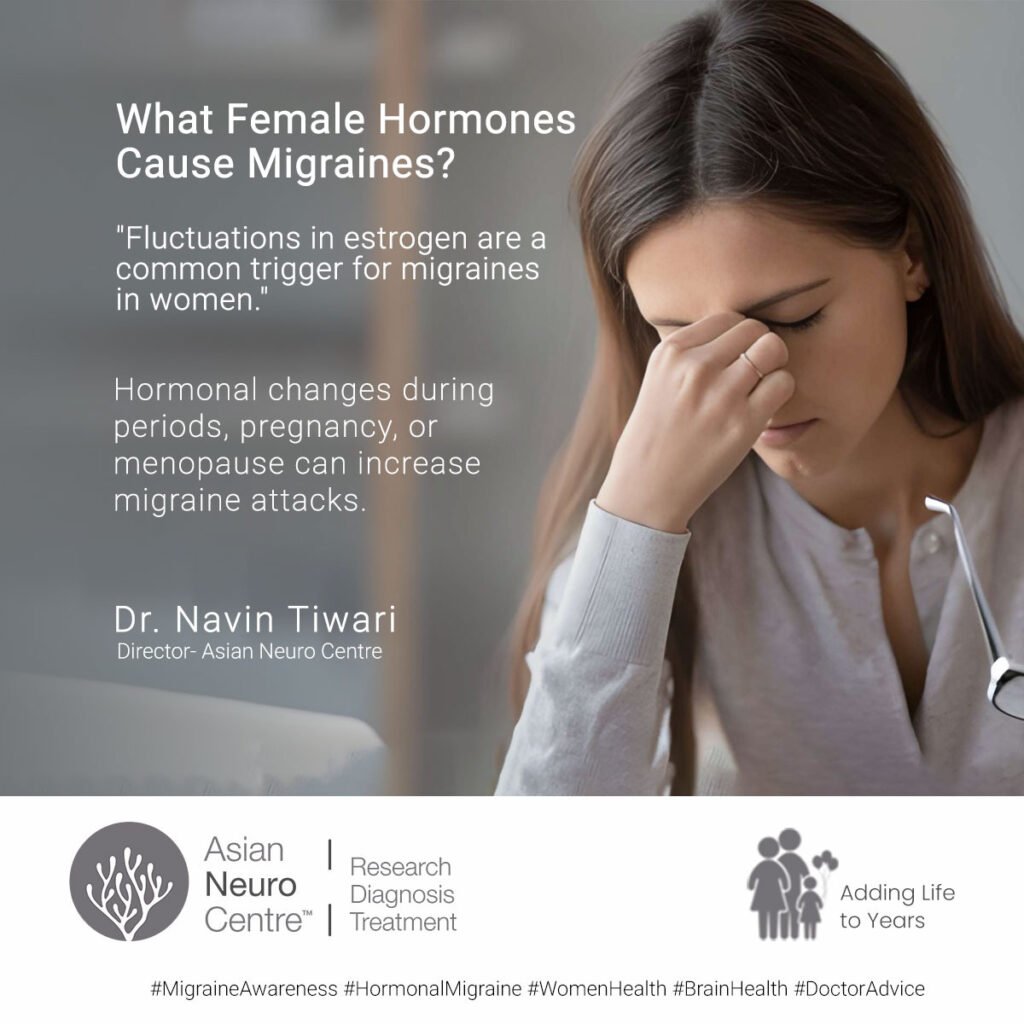
What Female Hormones Cause Migraines?
The primary female hormone responsible for triggering migraines is estrogen. Estrogen plays a vital role in regulating the menstrual cycle and supporting reproductive health. However, fluctuations in estrogen levels—especially a sudden drop—can trigger migraine attacks.
1. Estrogen and Menstrual Migraines
Many women experience migraines just before or during their periods. This is known as menstrual migraine. It happens because estrogen levels drop sharply right before menstruation begins. This sudden hormonal change can activate pain pathways in the brain, leading to migraine attacks.
2. Pregnancy and Migraines
During pregnancy, estrogen levels rise significantly. Interestingly, many women notice an improvement in migraine symptoms during the second and third trimesters because hormone levels remain stable. However, some may still experience migraines, particularly in early pregnancy when hormones are fluctuating.
3. Oral Contraceptive Pills
Birth control pills alter estrogen and progesterone levels. For some women, these hormonal changes may worsen migraines, especially during the pill-free week when estrogen levels drop. Others may find that their migraines improve with hormonal regulation. The effect varies from person to person.
4. Perimenopause and Menopause
During perimenopause, estrogen levels fluctuate unpredictably. This instability can increase the frequency and severity of migraines. After menopause, when hormone levels stabilize at a lower level, many women experience a reduction in migraine attacks.
5. Progesterone
Although estrogen is the primary trigger, progesterone also plays a role. The balance between estrogen and progesterone is important. Hormonal imbalance can influence brain chemicals such as serotonin, which is directly involved in migraine development.
In summary, it is not just the presence of female hormones but the fluctuation—especially the drop in estrogen—that triggers migraines in many women.
Female Migraines Treatment in Indore
If you are suffering from hormone-related migraines, expert neurological care is essential. In Indore, one of the most trusted names in migraine treatment is Dr. Navin Tiwari, a highly experienced and respected neurologist in Indore.
He practices at Asian Neuro Centre, a premier neurological facility dedicated to advanced and patient-focused care. The centre is known for its modern diagnostic tools, compassionate approach, and evidence-based treatment strategies.
Dr. Navin Tiwari specializes in diagnosing and managing all types of migraines, including menstrual migraines and hormone-triggered headaches. He carefully evaluates hormonal patterns, lifestyle factors, stress levels, and medical history to create a personalized treatment plan.
Treatment options may include preventive medications, hormonal management strategies, lifestyle modifications, stress management techniques, and dietary guidance.
What makes the Asian Neuro Centre stand out is its commitment to comprehensive neurological care. Patients receive detailed consultations, accurate diagnoses, and long-term management plans tailored to their specific needs.
Many women in Indore trust Dr. Navin Tiwari for his clinical expertise, compassionate communication, and consistent results.
If hormonal migraines are affecting your quality of life, seeking timely treatment can significantly reduce attack frequency and severity. With expert guidance from Dr. Navin Tiwari at Asian Neuro Centre, women can regain control over their health and live migraine-free lives.
Conclusion
Female hormones, especially estrogen, play a major role in triggering migraines due to their natural fluctuations during menstruation, pregnancy, and menopause.
While hormonal migraines can be distressing and disruptive, they are manageable with the right medical approach. Understanding the connection between hormones and migraine attacks is the first step toward effective treatment.
Dr. Navin Tiwari
Consulting Neurologist
