- Have any questions?
- 911 12345 29
- info@asianneurocentre.com

How Do I Know If My Headache Is Serious? | Headache Treatment in Indore
Can Stress Cause Migraine Attacks? | Migraine Attacks Treatment in Indore
August 7, 2026क्या मिर्गी की दवाई पूरी ज़िंदगी खानी पड़ती है? – डॉ . नवीन तिवारी
September 8, 2026What Does a Worry Headache Feel Like?
A headache can be uncomfortable and worrying, especially when it occurs repeatedly. A “worry headache” may feel like a dull, pressing, or tight sensation around the forehead, temples, or back of the head.
It is often associated with stress, anxiety, poor sleep, prolonged screen time, dehydration, or muscle tension in the neck and shoulders. Unlike some severe neurological headaches, tension-type headaches usually do not cause intense throbbing and may not significantly worsen with routine physical activity.
Occasional mild headaches that improve with rest, hydration, adequate sleep, or simple measures are often not a sign of a serious condition.
However, the pattern and associated symptoms are important when determining whether a headache needs medical attention.
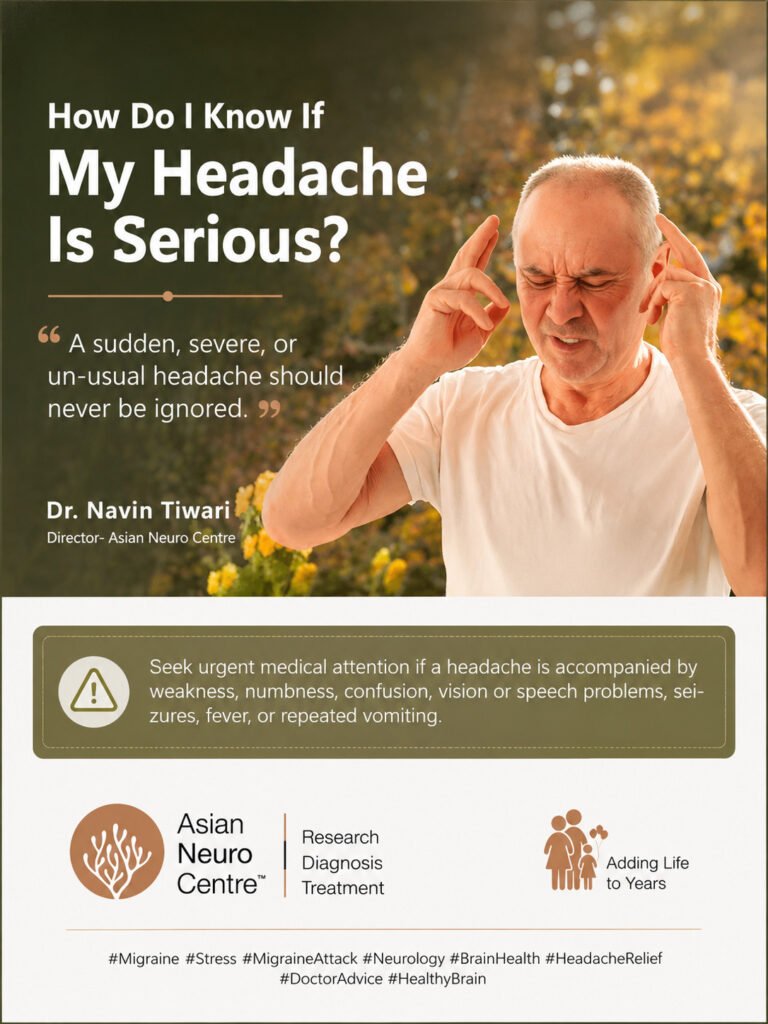
How Do I Know If My Headache Is Serious?
Not every headache is dangerous, but certain warning signs require prompt medical evaluation. A headache that suddenly becomes extremely severe, particularly if it reaches maximum intensity within seconds or minutes, should not be ignored.
This type of headache is sometimes described as a “thunderclap headache” and can be associated with serious conditions that require urgent assessment.
You should also seek medical attention if a headache occurs after a significant head injury or is accompanied by symptoms such as weakness or numbness on one side of the body, difficulty speaking, confusion, fainting, seizures, vision changes, or difficulty walking.
A severe headache accompanied by high fever, a stiff neck, repeated vomiting, or unusual drowsiness may also require urgent evaluation.
A new or progressively worsening headache can be concerning, particularly when it is different from headaches experienced previously. Headaches that repeatedly wake you from sleep, become more frequent or severe over time, or occur with unexplained weight loss or other neurological symptoms should be discussed with a doctor.
Migraine can also cause significant headache symptoms, often accompanied by nausea, vomiting, sensitivity to light or sound, and sometimes visual disturbances.
While migraines are usually not life-threatening, frequent or disabling headaches may benefit from professional diagnosis and preventive treatment.
Keeping a headache diary can be useful. Record when the headache starts, how long it lasts, where it occurs, its severity, possible triggers, associated symptoms, sleep patterns, and any medicines taken.
This information can help a neurologist identify patterns and determine whether further investigations are necessary.
Headache Treatment in Indore
Asian Neuro Centre is a premier medical facility in Indore dedicated to providing advanced neurological care. Led by Dr. Navin Tiwari, one of the most trusted and experienced neurologists in Indore, the centre specializes in the comprehensive diagnosis and treatment of a wide spectrum of brain and nerve-related conditions.
From stroke management to epilepsy care, the centre combines clinical expertise with a patient-first approach to support high standards of neurological care and recovery.
Headache treatment depends on its underlying cause. A neurologist may assess the patient’s medical history, headache pattern, neurological symptoms, lifestyle factors, and medication use.
Depending on the findings, treatment may include lifestyle modifications, appropriate medicines, trigger management, or additional investigations when clinically indicated.
Conclusion
Most occasional headaches are not caused by a serious medical condition, particularly when they are mild and improve with rest or routine measures.
However, a sudden, unusually severe, progressively worsening, or unusual headache accompanied by neurological symptoms requires medical evaluation.
Recognizing warning signs and consulting a neurologist when necessary can help identify the cause and ensure appropriate treatment.
Dr. Navin Tiwari
Consulting Neurologist
Frequently Asked Questions (FAQs)
Q. 1. How do I know if my headache is serious?
Ans. A headache may need medical evaluation if it is sudden and extremely severe, keeps getting worse, occurs frequently, or is accompanied by vomiting, vision problems, weakness, numbness, confusion, seizures, or difficulty speaking.
Q. 2. When should I see a neurologist for a headache?
Ans. You should consult a neurologist if your headaches are frequent, severe, affecting your daily activities, or not improving with usual medicines. A neurologist can identify the underlying cause and recommend appropriate treatment. Dr. Navin Tiwari is a best neurologist in indore. contact on +91- 9111234529
Q. 3. What are the warning signs of a dangerous headache?
Ans. A sudden severe headache, headache after a head injury, headache with fever and stiff neck, loss of consciousness, seizures, weakness, difficulty speaking, or sudden vision changes can require urgent medical attention.
Q. 4. What are the common causes of severe headaches?
Ans. Severe headaches can be caused by migraine, tension headaches, infections, sinus problems, medication overuse, and other medical or neurological conditions. Proper evaluation is important when headaches are severe or unusual.
Q. 5. What is the best treatment for severe headaches in Indore?
Ans. Headache treatment depends on the underlying cause, symptoms, and frequency of headaches. Dr. Navin Tiwari at Asian Neuro Centre, Indore provides expert evaluation and personalized treatment for headaches and migraine.
Q. 6. Can migraine cause very severe headaches?
Ans. Yes. Migraine can cause moderate to severe throbbing pain, often on one side of the head. It may also be accompanied by nausea, vomiting, and sensitivity to light or sound.
Q. 7. Can stress cause severe headaches?
Ans. Yes. Stress, anxiety, lack of sleep, and mental exhaustion can trigger or worsen headaches and migraine attacks. Identifying triggers and managing stress can help reduce the frequency of headaches.
Q. 8. Can taking painkillers frequently cause headaches?
Ans. Yes. Frequent use of some pain-relieving medicines can lead to medication-overuse headaches. If you regularly need painkillers for headaches, consult a neurologist for proper evaluation and treatment.
Q. 9. Where can I get headache treatment in Indore?
Ans. Asian Neuro Centre provides specialized headache and migraine evaluation in Indore under the care of Dr. Navin Tiwari. Patients can consult the clinic for diagnosis, treatment, and long-term management of recurring headaches.
