- Have any questions?
- 911 12345 29
- info@asianneurocentre.com

Can Stress Cause Migraine Attacks? | Migraine Attacks Treatment in Indore
मासिक धर्म या माहवारी के समय इतना तेज़ सिर दर्द क्यों होता है? – डॉ. नवीन तिवारी
July 25, 2026How Do I Know If My Headache Is Serious? | Headache Treatment in Indore
August 19, 2026What Does Migraine Feel Like?
A migraine is much more than a regular headache. It is a neurological condition that can cause intense, throbbing pain, usually on one side of the head, along with symptoms such as nausea, vomiting, sensitivity to light, sound, and even strong smells.
Some people also experience visual disturbances known as an aura before the headache begins. A migraine attack can last anywhere from a few hours to several days, making it difficult to perform everyday activities.
Many migraine sufferers notice that certain factors trigger their attacks. These triggers vary from person to person and may include lack of sleep, dehydration, hormonal changes, skipping meals, weather changes, certain foods, and emotional stress.
Understanding these triggers is one of the most effective ways to reduce the frequency of migraine attacks.
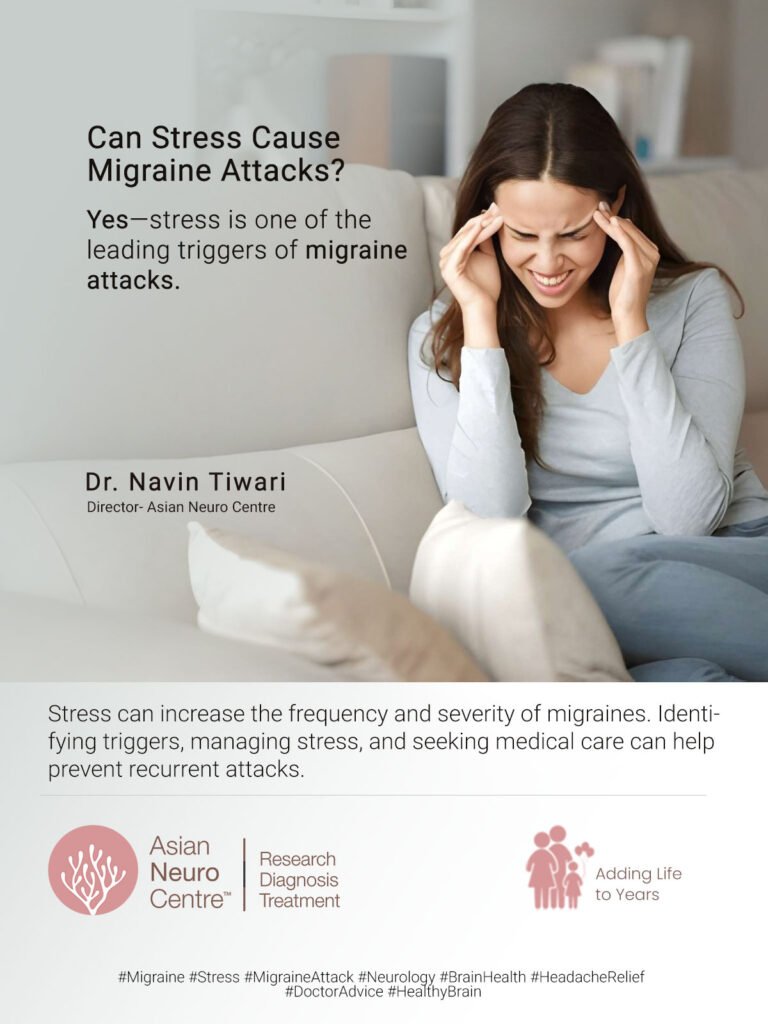
Can Stress Cause Migraine Attacks?
Yes, stress is one of the most common migraine triggers. When the body experiences emotional or physical stress, it releases hormones such as cortisol and adrenaline.
These hormonal changes can affect the nervous system, alter blood vessel function, and increase inflammation, all of which may contribute to the onset of a migraine attack.
Stress does not always cause a migraine immediately. In some cases, a migraine develops after the stressful event has passed, a phenomenon often referred to as a “let-down migraine.” This can happen because the body’s hormone levels change rapidly once the stressful situation ends.
People dealing with work pressure, financial concerns, family responsibilities, anxiety, or poor sleep are often at a higher risk of experiencing stress-related migraines. Chronic stress may also increase the frequency and severity of migraine attacks over time.
Managing stress is an important part of migraine prevention. Regular exercise, adequate sleep, meditation, yoga, deep breathing exercises, and maintaining a balanced daily routine can help reduce stress levels.
Keeping a migraine diary to identify stress patterns and other triggers is also beneficial. However, if migraines become frequent, severe, or interfere with daily life, professional medical evaluation is essential.
Migraine Attacks Treatment in Indore
Asian Neuro Centre is a premier medical facility in Indore dedicated to providing advanced neurological care. Led by Dr. Navin Tiwari, one of the most trusted and experienced neurologists in Indore, the centre specializes in the comprehensive diagnosis and treatment of a wide spectrum of brain and nerve-related conditions.
From migraine and chronic headaches to stroke management, epilepsy care, neuropathy, and other neurological disorders, the clinic combines advanced diagnostic technology with evidence-based treatment and a patient-first approach to deliver the highest standards of care.
Every patient receives a personalized treatment plan aimed at reducing symptoms, improving quality of life, and preventing future neurological complications.
Conclusion
Stress is a well-recognized trigger for migraine attacks, but it is not the only cause. Identifying personal triggers, adopting healthy lifestyle habits, and seeking timely medical care can significantly improve migraine control.
If you experience frequent or disabling migraines, consulting an experienced neurologist is the best step toward effective diagnosis and long-term management.
Dr. Navin Tiwari at Asian Neuro Centre, Indore, provides expert evaluation and comprehensive treatment for migraine and other neurological conditions, helping patients achieve lasting relief and better overall brain health.
Dr. Navin Tiwari
Consulting Neurologist
Frequently Asked Questions (FAQs)
Q.1. Can stress cause migraine attacks?
Ans. Yes. Stress is one of the most common triggers for migraine attacks. Emotional stress, anxiety, lack of sleep, and mental exhaustion can increase the frequency and severity of migraines in many people.
Q. 2. How does stress trigger migraine headaches?
Ans. Stress can cause changes in brain chemicals and hormones, which may trigger migraine attacks. Muscle tension, disturbed sleep, and increased cortisol levels can also contribute to migraine headaches.
Q. 3. What are the common symptoms of a stress-induced migraine?
Ans. Stress-related migraine symptoms may include severe throbbing headache, nausea, vomiting, sensitivity to light and sound, blurred vision, and difficulty concentrating. Symptoms may vary from person to person.
Q. 4. How can I prevent migraine attacks caused by stress?
Ans. Managing stress through regular exercise, adequate sleep, meditation, relaxation techniques, hydration, and a healthy diet may help reduce migraine attacks. Identifying personal migraine triggers is also important.
Q. 5. When should I see a neurologist for migraine?
Ans. If your migraine attacks are frequent, severe, or do not improve with medication, you should consult a neurologist. Dr. Navin Tiwari at Asian Neuro Centre, Indore provides expert diagnosis and personalized migraine treatment in Indore to help patients manage migraines effectively and improve their quality of life.
Q. 6. Who provides the best migraine treatment in Indore?
Ans. Dr. Navin Tiwari at Asian Neuro Centre provides comprehensive migraine evaluation and personalized treatment plans in Indore. Treatment focuses on identifying triggers, reducing migraine frequency, and improving long-term quality of life.
Q. 7. What treatments are available for migraine attacks?
Ans. Migraine treatment may include lifestyle modifications, preventive medications, pain-relieving medicines, trigger management, and personalized neurological care depending on the severity and frequency of attacks.
Q. 8. Can anxiety and depression increase migraine attacks?
Ans. Yes. Anxiety, depression, and chronic emotional stress can increase the frequency and intensity of migraine attacks. Managing mental health is an important part of migraine treatment.
Q. 9. Is every severe headache a migraine?
Ans. No. Not every severe headache is a migraine. Headaches may be caused by tension, sinus problems, infections, high blood pressure, or other neurological conditions. A proper neurological evaluation helps determine the exact cause.
Q. 10. How is migraine diagnosed?
Ans. Migraine is diagnosed based on your medical history, symptoms, neurological examination, and, if required, imaging tests to rule out other neurological disorders.
Q. 11. Can lifestyle changes help reduce migraine attacks?
Ans. Yes. Maintaining a regular sleep schedule, staying hydrated, eating balanced meals, avoiding known migraine triggers, exercising regularly, and managing stress can significantly reduce migraine attacks.
Q. 12. Where can I get migraine attack treatment in Indore?
Ans. Asian Neuro Centre, under the care of Dr. Navin Tiwari, offers advanced migraine diagnosis and treatment in Indore for patients experiencing frequent or chronic migraine attacks.
Q.13. How do I know if my migraine is from stress?
Ans. Stress-related migraines often occur after emotional stress, anxiety, lack of sleep, or mental exhaustion. If your migraine attacks frequently follow stressful situations, it may be stress-induced. A neurologist can help identify the exact cause and recommend the right treatment.
Q.14. How to prevent stress migraines?
Ans. You can help prevent stress migraines by managing stress, getting enough sleep, staying hydrated, eating regular meals, exercising, and avoiding known migraine triggers. If migraines occur frequently, consult Dr. Navin Tiwari at Asian Neuro Centre, Indore for expert evaluation and personalized migraine treatment.
