- Have any questions?
- 911 12345 29
- info@asianneurocentre.com

Can Cervical Problems Cause Vertigo?
When to Worry About Vertigo?
December 3, 2025Can Stress Cause Epilepsy? Triggers & Treatment in Indore
December 23, 2025What is Cervical?
The term cervical commonly refers to the cervical spine, which is the uppermost part of the backbone located in the neck region. It consists of seven vertebrae (C1–C7) that support the head, allow neck movement, and protect the spinal cord and nearby nerves.
The cervical spine also contains important blood vessels such as the vertebral arteries, which supply blood to parts of the brain, including the balance centers.
Cervical issues may include muscle strain, spondylosis (age-related wear and tear), cervical disc problems, arthritis, poor posture, or nerve compression.
These conditions can lead to pain, stiffness, tingling in the arms, headaches, and sometimes dizziness or vertigo.
What is Vertigo?
Vertigo is a type of dizziness where a person feels that they or their surroundings are spinning or moving even when standing still.
It is not a disease but a symptom that can arise from various conditions, especially problems related to the inner ear or the brain’s balance system.
Common causes of vertigo include Benign Paroxysmal Positional Vertigo (BPPV), inner ear infections, Meniere’s disease, migraines, low blood pressure, dehydration, and neurological issues.
Vertigo may last for a few seconds or continue for minutes, hours, or days depending on the underlying cause. Symptoms often include imbalance, nausea, vomiting, unsteadiness, and difficulty focusing the eyes.
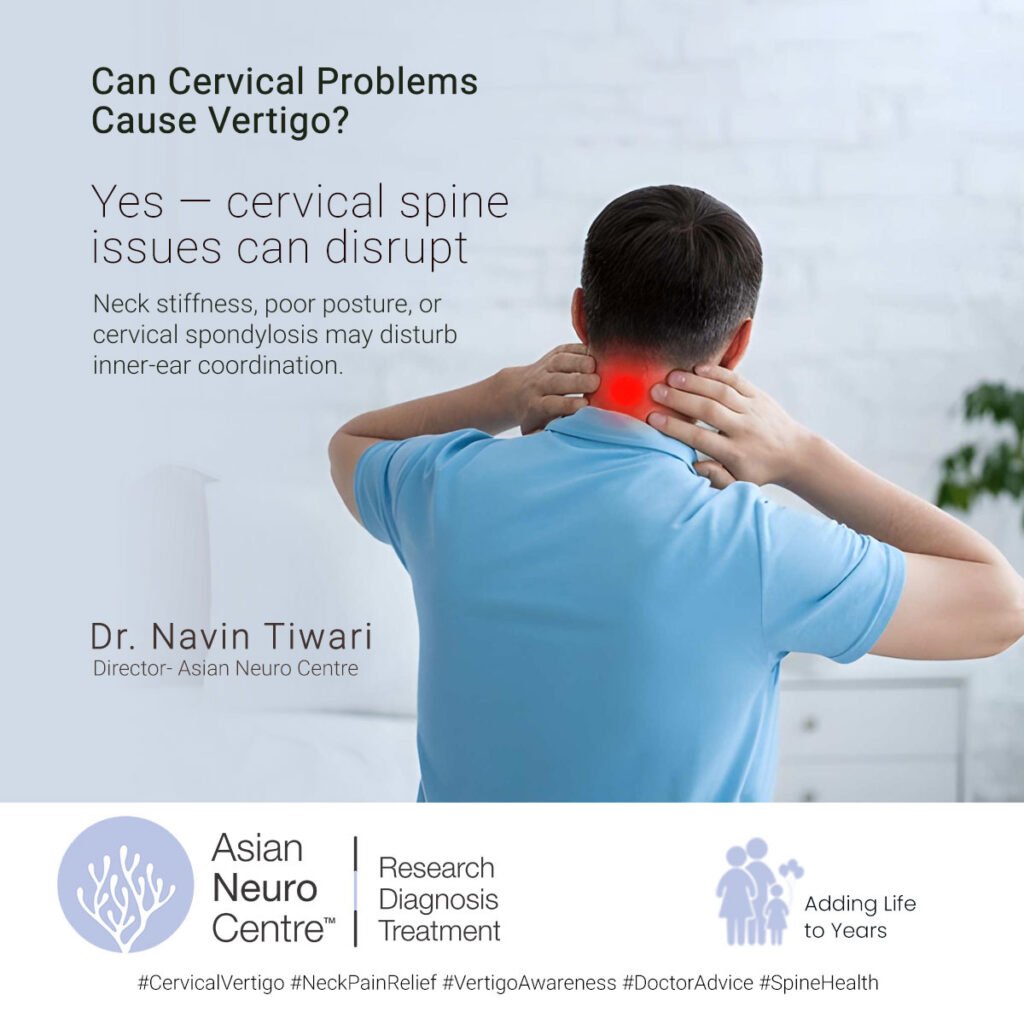
Can Cervical Problems Cause Vertigo?
Yes, cervical problems can cause vertigo in some cases. This condition is commonly known as cervicogenic vertigo or cervical vertigo. It occurs when neck issues interfere with the body’s ability to maintain balance.
There are several ways cervical problems may lead to vertigo:
1. Poor Blood Flow to the Brain
The vertebral arteries run through the cervical spine and supply blood to areas of the brain responsible for balance. Severe neck stiffness, spondylosis, or sudden neck movements can occasionally affect blood flow, leading to dizziness or vertigo.
2. Faulty Balance Signals
The neck contains many sensory receptors that help the brain understand the position of the head. When these receptors are irritated due to injury, muscle spasms, or cervical misalignment, the brain may receive incorrect signals, resulting in vertigo.
3. Muscle Tension and Nerve Compression
Tight neck muscles, cervical disc bulges, or nerve compression can interfere with nervous system communication. This disturbance may provoke dizziness, unsteadiness, and sometimes vertigo.
4. Whiplash or Neck Injury
Trauma to the neck—such as whiplash from an accident—can disrupt cervical structures and lead to vertigo along with pain and stiffness.
However, it is important to note that cervical vertigo is less common than vertigo caused by inner ear problems. Therefore, proper medical evaluation is necessary to identify the true cause.
Conclusion
Cervical problems can, in certain situations, cause vertigo due to disrupted balance signals, muscle tension, or compromised blood flow. However, not all dizziness originates from the neck, so it is important to distinguish cervicogenic vertigo from more common inner ear causes.
If you experience frequent neck pain along with dizziness or spinning sensations, consulting a doctor is essential for an accurate diagnosis and treatment.
Early care—such as posture correction, physiotherapy, and appropriate medication—can significantly improve symptoms and help prevent future episodes.
Dr. Navin Tiwari
Consulting Neurologist
