- Have any questions?
- 911 12345 29
- info@asianneurocentre.com

Can Stress Cause Epilepsy? Triggers & Treatment in Indore
Can Cervical Problems Cause Vertigo?
December 10, 2025मिर्गी का दौरा कितने दिनों में पड़ता है? | मिर्गी इलाज इंदौर में
January 3, 2026What is Epilepsy
Epilepsy is a chronic neurological disorder characterized by recurrent, unprovoked seizures. A seizure occurs due to sudden, abnormal electrical activity in the brain that temporarily disrupts normal brain function.
These episodes can vary widely—from brief staring spells or momentary confusion to uncontrollable jerking movements and loss of consciousness.
Epilepsy is not a single disease but a group of related conditions with different causes. It may develop due to genetic factors, brain injury, infections, stroke, tumors, or problems during brain development.
In many people, however, the exact cause of epilepsy remains unknown. The condition can affect individuals of any age and requires long-term management, often through medications, lifestyle adjustments, and regular medical follow-up.
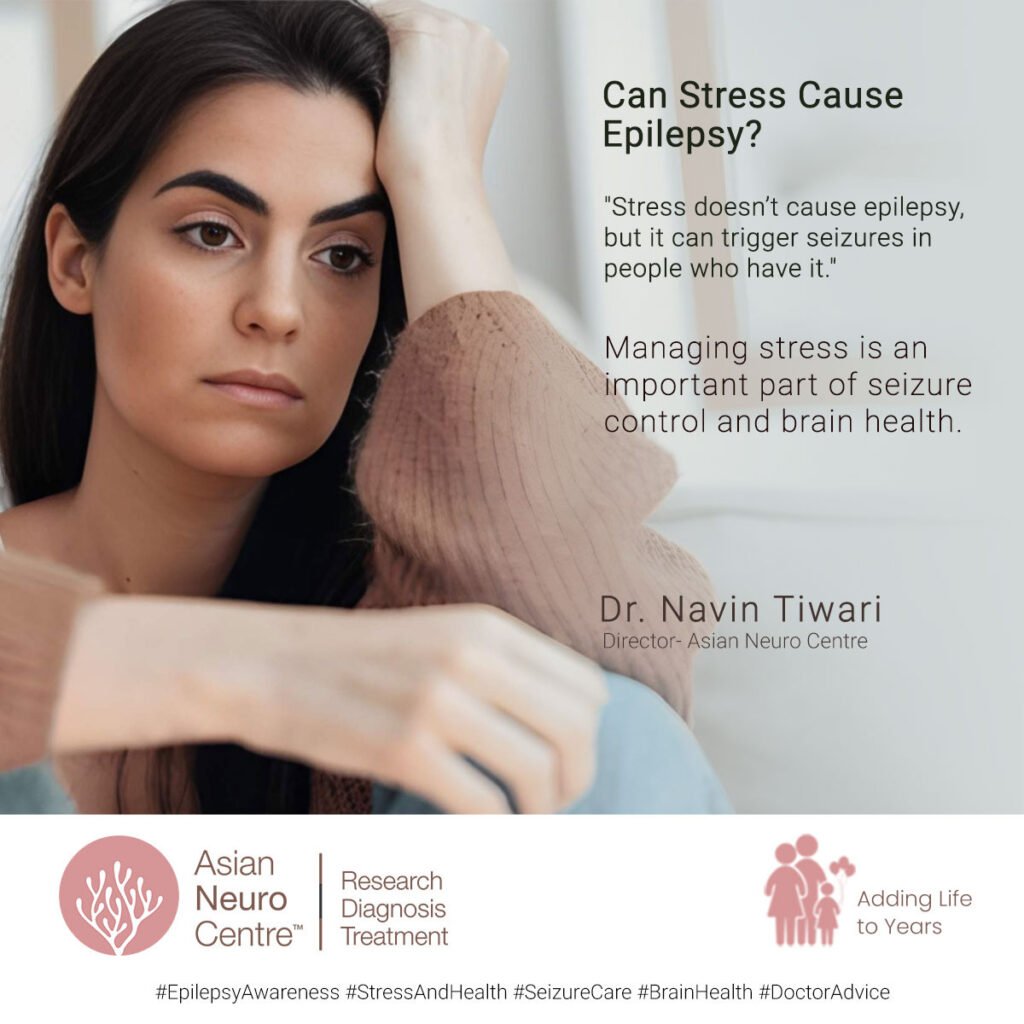
Can Stress Cause Epilepsy?
Stress is a natural physical and emotional response to challenging situations. While stress alone does not directly cause epilepsy, it plays an important role in triggering seizures in people who already have the condition.
Current medical research suggests that epilepsy develops due to underlying changes or damage in the brain, not solely because of stress. However, chronic or intense stress can lower the brain’s seizure threshold, making seizures more likely to occur in susceptible individuals. In this way, stress acts as a trigger, not a root cause.
Stress affects the body by releasing hormones such as cortisol and adrenaline. Prolonged exposure to these stress hormones can alter brain chemistry, disrupt sleep patterns, and increase fatigue—all known seizure triggers.
Emotional stress, anxiety, and depression are especially common in people with epilepsy and can worsen seizure control if left unaddressed.
In some cases, people experience seizures during or after highly stressful events, such as emotional trauma, work pressure, financial difficulties, or major life changes.
Additionally, stress can indirectly contribute to seizures by leading to unhealthy behaviors like poor sleep, missed medications, alcohol use, or irregular eating habits.
It is also important to distinguish epilepsy from stress-induced non-epileptic seizures, also known as psychogenic non-epileptic seizures (PNES).
These episodes resemble epileptic seizures but are not caused by abnormal electrical brain activity. Instead, they are linked to psychological stress or trauma and require a different treatment approach.
Epilepsy Treatment in Indore: Finding the Right Care
Living with epilepsy or witnessing a loved one experience a seizure can be overwhelming. While understanding the triggers—like the stress we’ve discussed—is a vital first step, the next is finding a medical partner who offers more than just a prescription.
If you are looking for specialized Epilepsy Treatment in Indore, Dr. Navin Tiwari at the Asian Neuro Centre is widely recognized for his patient-first approach. What sets his practice apart isn’t just the advanced diagnostic tools like digital EEG, but the way he handles the “human” side of neurological disorders.
Dr. Tiwari focuses on creating a tailored management plan that fits your specific lifestyle, aiming not just to control seizures but to improve your overall quality of life. Whether you are dealing with new-onset seizures or searching for a more effective way to manage chronic epilepsy, having an experienced neurologist in your corner makes all the difference.
Conclusion
Stress does not directly cause epilepsy, but it can significantly influence seizure activity in people who are already prone to seizures. Chronic stress can act as a powerful trigger, increasing seizure frequency and making epilepsy more difficult to manage.
Understanding this connection highlights the importance of stress management as part of comprehensive epilepsy care.
Techniques such as regular exercise, adequate sleep, relaxation practices, counseling, and mindfulness can help reduce stress levels and improve overall seizure control.
If stress or emotional difficulties are worsening seizures, seeking medical and psychological support is essential. Managing both neurological and emotional health plays a key role in improving the quality of life for people living with epilepsy.
Dr. Navin Tiwari
Consulting Neurologist
