- Have any questions?
- 911 12345 29
- info@asianneurocentre.com

Can Stress Cause Paralysis? | Paralysis Treatment in Indore
When Should I Be Worried About Numbness – Dr. Navin Tiwari
May 25, 2026माइग्रेन के समय आँखों के आगे अँधेरा क्यों आता है? | माइग्रेन सबसे अच्छा का इलाज इंदौर में
July 13, 2026What is Paralysis?
Paralysis is a medical condition characterized by the loss of muscle function in one or more parts of the body. It occurs when communication between the brain and muscles is disrupted due to damage to the nervous system.
Paralysis can affect different areas of the body and may be temporary or permanent, depending on the underlying cause.
There are several types of paralysis, including monoplegia (affecting one limb), hemiplegia (affecting one side of the body), paraplegia (affecting both legs), and quadriplegia (affecting all four limbs).
Common causes include stroke, spinal cord injury, traumatic brain injury, multiple sclerosis, and certain neurological disorders.
Symptoms of paralysis may include muscle weakness, loss of sensation, difficulty moving affected body parts, and impaired coordination.
Early diagnosis and treatment are crucial for improving outcomes and preventing complications.
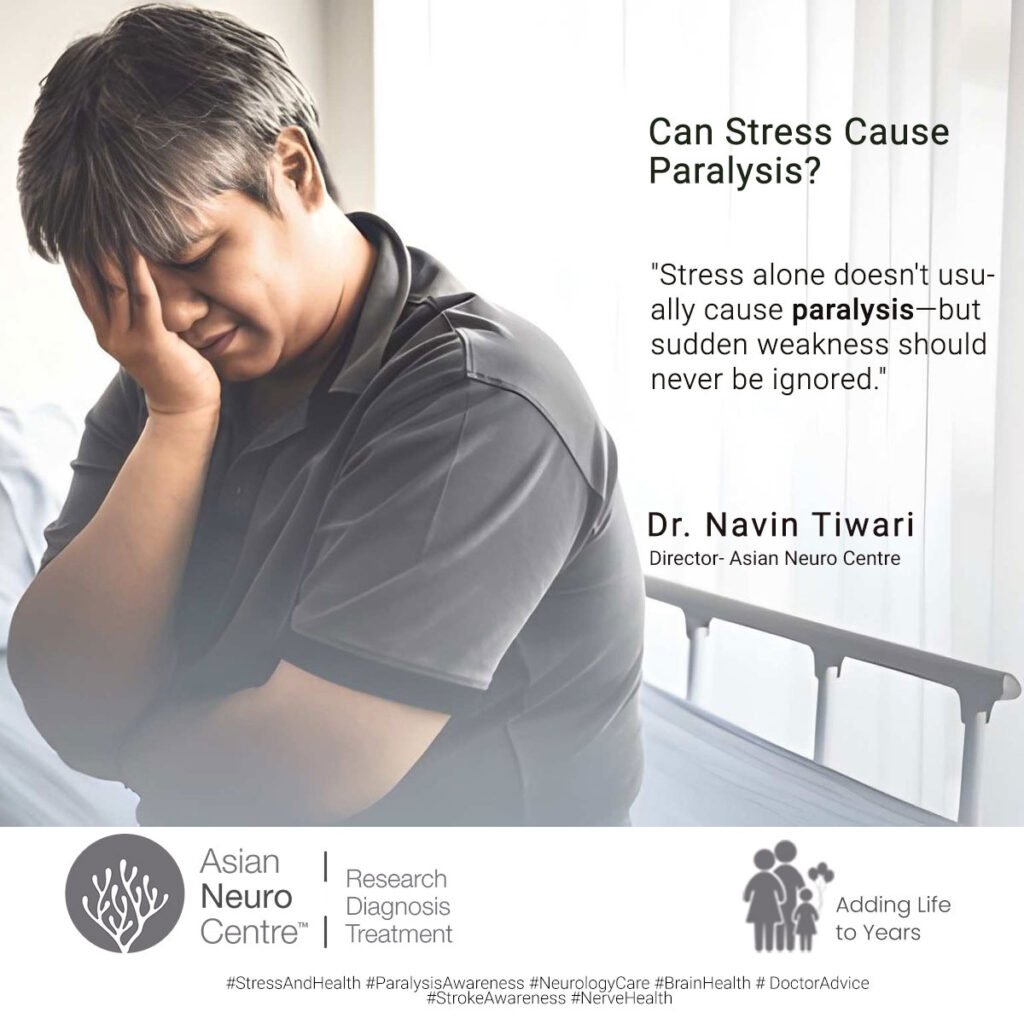
Can Stress Cause Paralysis?
Stress itself does not directly damage the nerves or muscles responsible for movement. However, severe psychological stress can sometimes trigger a condition known as Functional Neurological Disorder (FND), previously referred to as conversion disorder.
In this condition, individuals may experience symptoms such as weakness, numbness, tremors, or even paralysis without any detectable structural damage to the nervous system.
When a person experiences extreme emotional stress, anxiety, trauma, or psychological distress, the brain may respond in ways that affect normal movement and sensation.
As a result, temporary paralysis-like symptoms can occur. Although these symptoms are real and can significantly impact daily life, they are not caused by physical injury to the brain, spinal cord, or nerves.
It is important to understand that stress-related paralysis is relatively uncommon. Most cases of paralysis are linked to medical emergencies such as stroke, nerve damage, spinal cord injury, or neurological diseases.
Therefore, anyone experiencing sudden weakness or paralysis should seek immediate medical attention to rule out serious underlying conditions.
Managing stress through counseling, cognitive behavioral therapy, relaxation techniques, exercise, and lifestyle modifications can help reduce the risk of stress-related neurological symptoms. A thorough neurological evaluation is essential to determine the exact cause of paralysis and ensure appropriate treatment.
Paralysis Treatment in Indore
Asian Neuro Centre is a premier medical facility in Indore dedicated to providing advanced neurological care. Led by Dr. Navin Tiwari, one of the most trusted and experienced neurologists in Indore, the center offers comprehensive diagnosis and treatment for paralysis and other neurological disorders.
Paralysis treatment begins with identifying the underlying cause. Advanced diagnostic tools such as MRI scans, CT scans, nerve conduction studies, electromyography (EMG), and neurological examinations help determine the source of the problem. Based on the diagnosis, a personalized treatment plan is developed.
At Asian Neuro Centre, patients receive expert care for stroke-related paralysis, nerve disorders, spinal cord injuries, and other neurological conditions. Treatment may include medications, rehabilitation therapy, physiotherapy, occupational therapy, and lifestyle management. The goal is to improve mobility, restore function, and enhance the patient’s quality of life.
Dr. Navin Tiwari and his team focus on evidence-based treatment approaches and patient-centered care. Early intervention and rehabilitation play a crucial role in maximizing recovery and helping patients regain independence.
The center is committed to delivering high-quality neurological services using modern technology and clinical expertise.
Conclusion
Paralysis is a serious condition that results from the disruption of communication between the brain, nerves, and muscles. While stress does not directly cause physical nerve damage, severe psychological stress can sometimes contribute to functional neurological symptoms that resemble paralysis.
Because paralysis may indicate a serious neurological condition, prompt medical evaluation is essential.
Dr. Navin Tiwari
Consulting Neurologist
